Skip to Content
Exit

Author Archives: Enerquip

  1. How Food Processing Brings Your Holiday Favorites to the Table

    Comments Off on How Food Processing Brings Your Holiday Favorites to the Table

    The holidays are packed with timeless traditions—family gatherings, festive decorations, and the foods we wait all year to enjoy. Think creamy eggnog, rich pumpkin pie, and tangy cranberry sauce. But long before these dishes hit your plate, they go through carefully controlled food processing steps to ensure they’re safe, shelf-stable, and delicious.

    Let’s take a behind-the-scenes look at how thermal processing plays a key role in preparing these seasonal staples.

    Eggnog: Pasteurization is Key

    Eggnog combines two ingredients known for being finicky in food safety: milk and eggs. Because both can carry harmful bacteria, pasteurization is a must.

    There are two common methods for pasteurizing eggnog:

    • Batch pasteurization: Heating the mixture to 155°F for 30 minutes.

    • High-temperature, short-time (HTST) pasteurization: Heating to 175°F for 25 seconds.

    Both methods help eliminate pathogens like Salmonella and E. coli, making that festive glass of eggnog safe to sip.

    Canned Pumpkin: More Than Just Pumpkin

    Spoiler alert: your pumpkin pie may not be 100% pumpkin. Canned “pumpkin” often includes a blend of pumpkin and sweet squash—perfectly legal and very tasty.

    What matters most is food safety. Pumpkin puree falls into a category known as low-acid canned foods (LACFs), which means its pH (typically 4.9–5.5) is high enough to allow for bacterial growth if not handled properly. That’s why these products must go through high-heat processing—often pressure-cooked inside the can—to eliminate spores like Clostridium botulinum, which can cause botulism.

    The production process also includes:

    • Washing and sanitizing

    • Removing stems, seeds, and pulp

    • Chopping, steaming, and mashing

    • Sterilizing and canning

    It’s a complex journey, but all those steps are essential for that smooth, pie-ready texture.

    Cranberry Sauce: Naturally Acidic, Still Needs Processing

    Cranberries are naturally high in acid (around 2.4 pH), which makes them a less likely host for some dangerous bacteria. Still, pathogens like Salmonella can thrive if products aren’t processed correctly.

    That’s why cranberry juice and sauce are typically pasteurized. It not only extends shelf life, but ensures these tangy treats are safe to eat. In some cases, unpasteurized juice must carry a warning label to alert consumers of potential risks.

    Why Equipment Matters

    No matter the product—milk, juice, or squash—quality food processing equipment is critical. Consistent temperature control, cleanability, and durability are all essential for safe, efficient pasteurization.

    Stainless steel is a top choice for food-grade equipment thanks to its:

    • Corrosion resistance

    • Smooth, easy-to-clean surface

    • Compatibility with CIP (clean-in-place) systems

    It’s the material of choice for many processors looking to meet strict hygiene and safety standards while maintaining efficiency and reliability.

    Looking Ahead

    Holiday dishes may be rooted in tradition, but the equipment behind them is anything but old-fashioned. As food safety regulations evolve and consumer expectations grow, so does the demand for high-performance, hygienic processing systems.

    At Enerquip, we design and fabricate stainless steel shell and tube heat exchangers trusted by food and beverage manufacturers across the country. Whether you’re processing dairy, juice, or purees, we’ll help you find a thermal solution that meets your standards—and keeps your customers safe.

    Planning a process upgrade? Contact us to talk about your next project.


    More from the Enerquip Blog

  2. How to Choose the Right Heat Transfer Fluid for Your Operation

    Comments Off on How to Choose the Right Heat Transfer Fluid for Your Operation

    Heat transfer fluid (HTF) carries thermal energy through your exchanger system, either on the tube side or shell side, facilitating heating or cooling of your process materials.

    Selecting the ideal heat transfer fluid is critical to the performance, safety, and longevity of your shell and tube heat exchanger. The right fluid can enhance efficiency, reduce maintenance needs, and extend equipment life. The wrong one can cause fouling, corrosion, or poor heat transfer.

    Common HTF options include:

    • Water and steam
    • Glycol-based fluids
    • Silicone-based fluids
    • Mineral oils

    When choosing the right fluid for your operation, it’s important to look beyond basic compatibility. Below are the main considerations to guide your decision.

    1. Cost and Availability

    While performance should always take priority, cost and accessibility play important roles in HTF selection. You need a fluid that fits your budget and can be easily replenished when maintenance or replacement is required.

    • Glycol-based fluids are popular across many industries for their cost-effectiveness and wide availability. They can be safely mixed with water to lower freezing points and raise boiling points, providing excellent temperature control.

    • Silicone-based fluids are more expensive but offer superior thermal stability and longevity, especially at high operating temperatures.

    No other HTF can be safely diluted with water, which makes glycol a particularly flexible choice.

    2. Proper Allocation: Shell side or Tube side?

    The placement of your HTF—on the shell side or tube side—can have a major impact on efficiency, safety, and ease of maintenance. The right choice depends on factors like pressure, fouling potential, and corrosion risk.

    When to Use the Tube side

    Your HTF is better suited for the tube side if it is:

    • High pressure
    • Prone to fouling
    • Corrosive
    • Likely to solidify

    Tubes are easier and less costly to clean, remove, or replace than shells. High-pressure fluids are also easier to control within smaller-diameter tubes, which allows for safer and more efficient operation.

    When to Use the Shell side

    If your fluid has a low pressure drop, high viscosity, or will condense during operation, it may perform better on the shell side. Proper baffle placement and shell design can accommodate these characteristics while maintaining optimal heat transfer.

    3. Regular Monitoring and Maintenance

    Even the best HTFs degrade over time due to thermal stress, oxidation, or contamination. Regular monitoring ensures continued performance and prevents costly damage.

    As an HTF breaks down, it may:

    • Lose viscosity, requiring more energy to pump through the system.
    • Reach higher temperatures, increasing the risk of overheating.
    • Accelerate equipment wear and corrosion, reducing exchanger lifespan.

    Implement a routine fluid testing schedule to check for viscosity changes, contamination, or signs of degradation. Replacing degraded HTF early helps protect both your equipment and your product quality.

    Plan Your Heat Exchanger for Long-Term Success

    Selecting the right heat transfer fluid is just one part of designing a safe and efficient shell and tube heat exchanger. The overall performance depends on factors such as:

    • Process application and working conditions
    • Material compatibility
    • Cleaning and maintenance requirements
    • Sanitary or industrial design needs

    At Enerquip, our experienced engineers design and fabricate shell and tube heat exchangers tailored to your process. We serve industries ranging from food and beverage to pharmaceutical, oil and gas, and industrial processing.

    Whether you need help selecting the best HTF or designing a custom exchanger, our team can ensure your system operates efficiently and safely. Contact us today.

    Need a unit or spare part fast? Enerquip stocks a variety of sanitary U-tube exchangers for quick turnaround.


    More from the Enerquip Blog

    Horizontal vs. Vertical Baffles: Choosing the Right Design for Your Shell and Tube Heat Exchanger

    7 Shell Configurations to Consider When Designing a Shell and Tube Heat Exchanger

    Preventing Cross Contamination in Shell and Tube Heat Exchangers

    How Almost Any Industry Can Benefit from Waste Heat Recovery

    What to Know About Clean-in-Place (CIP) Systems

  3. Why More Facilities Are Turning to Hot Oil Heating Systems Over Steam Boilers

    Comments Off on Why More Facilities Are Turning to Hot Oil Heating Systems Over Steam Boilers

    When it comes to industrial process heating, both steam boilers and thermal fluid (hot oil) heating systems have long served as dependable solutions. However, as efficiency, safety, and cost-effectiveness become top priorities across industries, more facilities are discovering that thermal fluid systems offer significant advantages over traditional steam setups.

    Let’s take a closer look at how hot oil systems compare to steam boilers—and why so many manufacturers, processors, and production facilities are making the switch.

    1. Greater Energy Efficiency

    Hot oil heating systems operate on a closed-loop design that minimizes heat loss and maximizes energy transfer. Unlike steam, which must constantly convert water to vapor and then back to liquid, thermal fluids circulate continuously—providing consistent heat with less fuel consumption.

    This efficient operation allows plants to:

    • Achieve higher operating temperatures (up to 650°F) without pressurization.
    • Reduce fuel costs thanks to improved heat transfer and lower system losses.
    • Maintain steady, uniform temperatures that enhance process control and product quality.

    In short, thermal fluid heaters deliver more usable heat energy to your process with less energy input.

    2. Lower Maintenance and Operating Costs

    Steam systems require frequent attention—managing water treatment, maintaining condensate return systems, and ensuring proper blowdown to remove impurities. Each of these steps takes time, resources, and additional equipment.

    Hot oil systems simplify operations by eliminating many of these ongoing requirements:

    • No water treatment chemicals or deaerators needed.
    • No steam traps or condensate handling equipment to maintain.
    • No blowdown losses or water disposal concerns.

    Because thermal fluids do not corrode piping or components, system longevity increases while maintenance downtime decreases—resulting in lower lifecycle costs and improved system reliability.

    3. Enhanced Safety and System Reliability

    Steam boilers must operate under high pressure to reach elevated temperatures, which increases the risk of leaks, explosions, and other safety concerns. Thermal fluid heaters, on the other hand, achieve similar or higher temperatures at low or even atmospheric pressure.

    This low-pressure design:

    • Reduces risk to personnel and equipment.
    • Simplifies compliance with safety regulations.
    • Minimizes mechanical stress on system components.

    Additionally, thermal fluids won’t freeze in cold climates and don’t cause corrosion, which helps protect critical infrastructure and prevent costly system failures.

    4. Flexibility and Easy Integration

    Hot oil systems can be installed as new systems or integrated into existing operations with relative ease. Their closed-loop design and smaller footprint make them ideal for a wide range of industrial applications—from chemical processing to asphalt production.

    Because they operate efficiently and cleanly, thermal fluid heaters are also well-suited for facilities aiming to meet sustainability or emission-reduction goals.

    5. Long-Term Cost Savings

    While the initial setup costs for a thermal fluid system can be comparable to a steam boiler, the operating savings quickly add up. Lower fuel usage, reduced maintenance, and the absence of water treatment expenses all contribute to a lower total cost of ownership over time.

    In addition, many facilities appreciate the simplicity of operation. In most states, thermal fluid heaters do not require a full-time, licensed boiler operator, reducing labor costs without compromising safety or performance. This can save upwards of $80,000 a year. Also with a thermal fluid heater, there is no need for a pretreating skid ($40,000), or deaerator ($40,000), or chemical injection system ($15,000), saving even more.

    A Smarter, More Reliable Way to Heat

    Thermal fluid heating systems offer a combination of efficiency, safety, and reliability that’s hard to match with traditional steam boilers. For many facilities, switching to hot oil heating means less maintenance, fewer operational interruptions, and greater control over critical processes.

    Whether you’re looking to improve efficiency, reduce maintenance costs, or modernize your plant’s heating system, a thermal fluid heater may be the ideal solution. Contact us to get started today.


    More from the Enerquip Blog

    Thermal Fluid Heater Guide: Choosing the Right Heater for Your Facility

    How to Prepare for Thermal Fluid Heating Equipment Installation

    Retrofitting Industrial Heating Equipment: Important Things To Consider

    How to Prepare Your Facility for a Thermal Fluid Heating System Installation

    Behind the Burn: How Heat Transfer Systems Refine Aviation Fuel

    How to Choose the Right Thermal Heating Fluid for Your System


  4. Retrofitting Industrial Heating Equipment: Important Things To Consider

    Comments Off on Retrofitting Industrial Heating Equipment: Important Things To Consider

    When it comes to modernizing or upgrading industrial heating systems, retrofitting is often one of the first options considered. Whether you’re repairing an aging system, improving performance, or repurposing equipment for a new process, retrofitting can be an effective way to extend the life of your investment.

    However, while retrofitting offers many advantages, it also comes with important challenges and limitations. Understanding these factors early in the process can help you make a well-informed decision that aligns with your operational goals, safety standards, and budget.

    Below are six essential things to consider before retrofitting your industrial heating equipment.

    1. Careful Planning Is Essential

    A successful retrofit begins with thorough planning. Evaluate whether the existing equipment can be retrofitted safely and efficiently, and confirm that the project will deliver the results you’re looking for.

    Collaborate closely with qualified engineers and system designers to determine:

    • What modifications are required
    • The estimated cost and project timeline
    • Potential disruptions to plant operations
    • Compatibility with existing infrastructure

    Taking the time to assess feasibility upfront can prevent costly surprises later in the process.

    2. Understand and Comply With Code Requirements

    Every industry has specific codes and safety standards that must be met when modifying or installing heating systems. These can include requirements for:

    • Pressure vessel design

    • Emissions and energy efficiency

    • Electrical and mechanical safety

    • Environmental regulations

    If your retrofit plan is unconventional or involves custom components, it’s especially important to verify compliance before work begins. Noncompliance can lead to project delays, fines, or even system shutdowns.

    3. Review Warranties and Service Agreements

    Retrofitting can sometimes affect the original equipment warranty. Before proceeding, ask:

    • Will this work void existing warranties?
    • Who will warranty the retrofitted system?
    • What are the terms for service or maintenance after installation?

    Clear answers to these questions will help you avoid unexpected costs or service gaps in the future.

    4. Evaluate the Impact on Efficiency

    One of the main goals of a retrofit is often to improve system efficiency. However, not all modifications result in performance gains—especially when equipment is repurposed for a new function.

    Measure your system’s current efficiency and establish performance benchmarks before and after the retrofit. This data will help you evaluate whether the investment delivers the expected return.

    5. Recognize That Retrofitting Isn’t Always Feasible

    In some cases, retrofitting may simply not be possible. Physical space constraints, outdated designs, or incompatible materials can make upgrades impractical or unsafe.

    If that’s the case, it may be more cost-effective to explore a new, customized heating system designed for your facility’s specific requirements.

    6. Consider When a New System Might Be the Better Choice

    Even if retrofitting is technically feasible, it might not be the best long-term solution. A new system may offer:

    • Higher energy efficiency
    • Improved reliability and safety
    • Lower maintenance costs
    • Advanced control and automation features

    While the upfront investment is higher, new systems often provide greater value and performance over time—especially for facilities aiming to meet modern energy or sustainability goals.

    Making the Right Choice for Your Facility

    If your facility is considering a retrofit or complete system upgrade, it’s important to weigh all your options. Partnering with an experienced industrial heating equipment manufacturer can help you determine the best path forward.

    At Enerquip, we’ve spent over 30 years helping facilities design, upgrade, and maintain efficient thermal fluid heating systems. Whether you’re evaluating a retrofit or exploring a new custom solution, our team can help you identify the most cost-effective and reliable option for your operation.

    Ready to explore your options? Contact us today.

    More from the Enerquip Blog

    How to Store Your Process Equipment Before Installation

    How to Choose the Right Thermal Heating Fluid for Your System

    The Case for Waste Heat Recovery: Why Your Facility Shouldn’t Ignore It

    Thermal Fluid Heater Maintenance: How To Keep Your Equipment Up & Running

    Why Investing in High Grade Heat Transfer Fluid is a MUST

  5. Why Routine Plant Operator Training is So Important

    Comments Off on Why Routine Plant Operator Training is So Important

    In industrial facilities, unexpected shutdowns can halt productivity, cause costly delays, and even pose safety risks. While equipment failure is sometimes to blame, operator error remains one of the most common causes of plant downtime. The good news? Consistent, high-quality operator training can dramatically reduce these risks.

    Plant operators play a hands-on role in daily operations, directly influencing productivity, efficiency, and safety. When properly trained, they help ensure that systems run smoothly. When training is inconsistent or outdated, however, even small mistakes can lead to major disruptions.

    This is why routine plant operator training is essential for any facility that depends on thermal process equipment.

    Why Routine Training Matters

    1. Preventing Unplanned Shutdowns

    Human error is one of the leading causes of unexpected shutdowns. Regular training ensures your operators understand proper procedures and can identify and correct potential issues before they escalate. By keeping your team up-to-date, you minimize unplanned downtime and maintain steady productivity.

    2. Promoting Workplace Safety

    Safety is a top priority in any plant environment. Routine safety training helps employees recognize hazards, follow correct protocols, and react effectively in emergencies. In facilities that use thermal process equipment, safety training is especially vital to prevent burns, leaks, or equipment damage. A well-trained team is a safer team.

    3. Improving Efficiency and Performance

    Well-trained employees are not only safer—they’re faster and more effective. When operators fully understand their equipment and responsibilities, they complete tasks more efficiently and troubleshoot minor issues without delay. This not only saves time and resources but also enhances overall plant performance.

    4. Preparing for Employee Turnover or Retirement

    In many plants, veteran employees hold years of valuable knowledge. Regular training ensures that critical information doesn’t leave when they do. Cross-training multiple operators on key tasks keeps your operation resilient and prevents overreliance on a single individual.

    Key Areas for Operator Training

    Every facility has unique processes, but the following training categories apply to most:

    General Equipment and Process Training

    Operators should understand their day-to-day responsibilities, standard operating procedures, and available resources like equipment manuals and supervisor guidance. The goal is to make routine tasks second nature, reducing hesitation and mistakes.

    Safety Training

    Comprehensive safety education covers both prevention and response—teaching operators how to identify risks, use protective equipment properly, and handle hazardous materials or emergency shutdowns safely.

    Maintenance and Inspection

    Creating a maintenance-first culture starts with training. Teach operators how to recognize early signs of wear, perform basic upkeep, and follow reporting protocols. Proactive maintenance prevents costly breakdowns and extends equipment life.

    Shutdown and Startup Procedures

    Planned or unplanned, shutdowns require precision. Training employees on shutdown and startup sequences ensures smoother transitions, protects equipment, and minimizes production loss.

    Troubleshooting and Problem Solving

    Empower operators to quickly and safely identify and resolve minor issues. With the right training, they can restore systems to full operation faster—often without waiting for specialized technicians.

    How Often Should You Train Plant Operators?

    While every industry differs, annual training should be considered the bare minimum. Many facilities benefit from quarterly or biannual refresher courses, especially when new systems, technologies, or safety regulations are introduced.

    Think of training as an investment, not an expense. The time and cost of regular training pale in comparison to the potential losses from accidents, inefficiency, or equipment failure.

    Investing in Training Pays Off

    Routine plant operator training helps you:

    • Prevent costly downtime
    • Improve operational efficiency
    • Protect employee safety
    • Strengthen your workforce continuity

    When your operators are confident and competent, your facility runs more smoothly—and your bottom line benefits.

    Keep Your Facility Running Strong

    If your goal is to improve safety, efficiency, and reliability, start by investing in your team. Routine training equips your operators with the knowledge and confidence to handle complex systems and unexpected challenges. And when it comes to keeping your systems performing at their best, high-quality thermal equipment makes all the difference.

    At Enerquip, we design and manufacture stock and custom thermal solutions right here in the USA. Built to your specifications and engineered for long-term reliability, our equipment supports safe, efficient, and consistent operations.

    Ready to learn more?
    Explore our range of thermal solutions, read customer testimonials, or request a quote.

    More from the Enerquip Blog

    How to Prepare Your Facility for a Thermal Fluid Heating System Installation

    Behind the Burn: How Heat Transfer Systems Refine Aviation Fuel

    How to Store Your Process Equipment Before Installation

    Horizontal vs. Vertical Baffles: Choosing the Right Design for Your Shell and Tube Heat Exchanger

    7 Shell Configurations to Consider When Designing a Shell and Tube Heat Exchanger

  6. How to Make the Most of Your Scheduled Maintenance Shutdown

    Comments Off on How to Make the Most of Your Scheduled Maintenance Shutdown

    Planned maintenance shutdowns are a key part of keeping your plant running safely and efficiently. But if you only get one or two windows a year to take critical systems offline, you’ve got to make it count. That means planning ahead, coordinating your team, and having the right parts in hand before the wrenches come out.

    Whether your next shutdown is around the holidays or tied to a seasonal lull, here are some simple ways to make it smooth and productive.

    Review Equipment Performance and History

    Start with a quick health check of your equipment:

    • When was it last serviced?

    • Has it been running slower or less efficiently?

    • Are there any recurring issues?

    Use your maintenance records to identify components nearing the end of their lifecycle. If something’s showing signs of wear, now’s the time to plan a replacement—or at least inspect it more closely.

    Pro Tip: Keep serial numbers, model info, and part specs handy so you can quickly reference or reorder anything you need.

    Order Spare Parts Early

    You’re not the only one scheduling downtime during slow seasons. Avoid delays by ordering your spare parts early—especially long-lead items like:

    • Tube bundles

    • Gaskets

    • O-rings

    At Enerquip, we stock common replacement parts and offer lead times that beat the industry average. That means less waiting and more doing when maintenance day arrives.

    Don’t Overlook Your Heating System

    Cold weather is a great reminder to give your heating equipment a little TLC. Here’s what to check:

    • Clean burners and flues to remove carbon buildup

    • Calibrate pressure gauges and safety valves

    • Ensure flames are clean and unobstructed to reduce fire risk

    Bonus tip: If your process produces hot fluids or steam, you may be sitting on a hidden energy savings opportunity. A shell and tube heat exchanger can help you capture waste heat and redirect it elsewhere—boosting energy efficiency and lowering utility bills.

    Check Your Cooling System, Too

    Even if your chillers and cooling towers are off for the season, don’t forget them during your shutdown:

    • Inspect for wear or damage from summer and fall

    • Drain condensate and flush lines, if needed

    • Look for corrosion or buildup in tubes or towers

    Catching issues now helps you avoid costly surprises when it’s time to power them back up.

    Prioritize Safety—Inside and Out

    Slip hazards spike in the winter, especially near entrances and high-traffic areas. Stock up on:

    • Scraper mats to remove snow and debris from boots

    • Absorbent mats to soak up moisture and prevent puddles

    Don’t forget to salt or sand outdoor walkways and loading docks to keep your team safe year-round.

    Be Ready for Power Interruptions

    If you operate in a region prone to winter storms, a backup power strategy is a must. Make sure:

    • Your generator is inspected, fueled, and ready to go

    • You have a plan for critical equipment shutdowns and restarts

    • Emergency contact and response protocols are updated and accessible

    Plan Ahead—Avoid Downtime

    The best shutdowns are the ones that go off without a hitch. That means getting ahead of the game:

    • Review your goals for the day

    • Stock up on the right spare parts

    • Coordinate your team and communicate timelines

    Need replacement parts for your shell and tube heat exchanger or thermal fluid heater? Contact the Enerquip team to get what you need—fast.


    More from the Enerquip Blog

  7. Horizontal vs. Vertical Baffles: Choosing the Right Design for Your Shell and Tube Heat Exchanger

    Comments Off on Horizontal vs. Vertical Baffles: Choosing the Right Design for Your Shell and Tube Heat Exchanger

    When it comes to designing a shell and tube heat exchanger, one small detail can make a big difference in efficiency: baffle orientation.

    Baffles are thin metal plates strategically placed within the shell. While they may look simple, they play a crucial role in heat transfer, pressure drop, and structural stability. Understanding the difference between horizontal and vertical baffles helps engineers and plant operators optimize performance for their specific process.

    Straight tube heat exchanger with baffles
    Take a fly-through tour to see how steam or liquid flows through a heat exchanger with baffles.

    Why Baffles Matter in Heat Exchangers

    Baffles inside a shell and tube heat exchanger serve three key functions:

    1. Support the tube bundle – preventing vibration and damage from fluid movement.
    2. Maintain tube spacing – keeping tubes aligned and structurally sound.
    3. Direct shell side flow – influencing how the fluid moves across the tubes, which directly impacts heat transfer rates and pressure drop.

    The orientation of baffles—whether installed horizontally or vertically—determines how efficiently the exchanger operates.

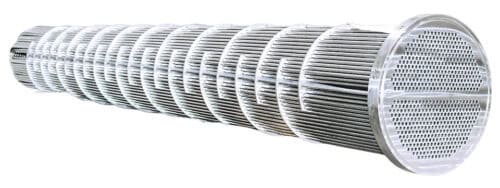
    Tube Bundle with Baffles

    Horizontally-Arranged Baffles

    Horizontal baffles are the most common orientation and are often assumed as the default in heat exchanger design.

    Advantages of Horizontal Baffles:

    • Prevents fouling and deposits: Particularly effective for single-phase shell side fluids, reducing the risk of buildup at the bottom of the exchanger.
    • Improves mixing: Warmer fluid at the top mixes with cooler fluid below, preventing stratification.
    • Higher heat transfer rates: Longer flow paths and increased turbulence generally lead to greater heat transfer efficiency.
    • Stable flow at low velocities: Helps maintain consistent fluid movement, even when shell side velocity is lower.

    When to Choose Horizontal Baffles:

    • Single-phase shell side operations
    • Processes requiring higher heat transfer performance
    • Applications where fouling is a concern

    Vertically-Arranged Baffles

    Vertical baffles, while less common, are a smart choice for certain process conditions.

    Advantages of Vertical Baffles:

    • Ideal for condensation applications: Condensate flows naturally downward toward the outlet, avoiding buildup.
    • Lower pressure drop: Especially beneficial when leakage flows are present or when operating with gaseous shell side fluids.
    • Simplifies two-pass exchanger design: Particularly useful in F-type shells.

    When to Choose Vertical Baffles:

    • Processes involving condensation on the shell side
    • Systems where minimizing pressure drop is a priority
    • Heat exchangers handling gaseous shell side fluids

    Horizontal vs. Vertical Baffles: Key Considerations

    FactorHorizontal BafflesVertical Baffles
    Heat Transfer RateGenerally higherLower, but adequate for specific cases
    Pressure DropHigher (with leakage flows)Lower
    Best forSingle-phase fluids, higher efficiencyCondensation, gas flows, low-pressure drop needs
    Fouling PreventionEffectiveLess effective for liquids

    Choosing the Right Baffle Orientation

    There is no universal “best” option—the right choice depends on your process requirements. If maximizing heat transfer is your goal, horizontal baffles are often preferred. If lowering pressure drop or handling condensation is more important, vertical baffles may be the better fit.

    For many industries, the most effective solution is a custom-designed shell and tube heat exchanger that takes into account:

    • Fluid properties
    • Operating pressures and temperatures
    • Desired efficiency
    • Maintenance considerations

    Expert Guidance for Custom Heat Exchanger Design

    At Enerquip, we specialize in designing and fabricating custom shell and tube heat exchangers for a wide range of industries. Our team works directly with clients to determine the most effective baffle configuration and overall design for their process.

    Ready to talk? Contact our team today to explore a custom solution that fits your operation.


    More from the Enerquip Blog

    Freezing Fouling in Shell and Tube Heat Exchangers: What You Need to Know

    7 Shell Configurations to Consider When Designing a Shell and Tube Heat Exchanger

    Preventing Cross Contamination in Shell and Tube Heat Exchangers

    How to Store Your Process Equipment Before Installation

    TEMA Types Explained

    What to Know About Clean-in-Place (CIP) Systems

  8. How to Prepare Your Facility for a Thermal Fluid Heating System Installation

    Comments Off on How to Prepare Your Facility for a Thermal Fluid Heating System Installation

    Installing thermal fluid heating equipment is a significant investment for any facility. From researching the right industrial heating system to choosing a manufacturer you can rely on, the process often takes months of planning. But the work doesn’t end once you’ve purchased the equipment—successful installation requires careful preparation.

    Proper planning ensures a smooth transition from old equipment to new, minimizes downtime, and helps keep your team safe throughout the process. Below, we’ll walk through the key steps to prepare your facility for a new thermal fluid heating system installation.

    1. Don’t Wait Until the Last Minute

    While it may be tempting to run equipment until it fails completely, this approach often leads to costly downtime and emergency replacements. Instead, begin preparing for an upgrade as soon as you notice that a system is nearing the end of its useful life.

    By planning early, you can:

    • Minimize disruptions to production.
    • Schedule installation during an optimal downtime period.
    • Avoid unexpected costs and safety risks associated with a complete system failure.

    2. Plan the System Layout Strategically

    Before installation, confirm that your new system components will fit within your facility’s available space. A thoughtful layout can improve safety, streamline maintenance, and optimize system performance.

    When planning your layout, consider:

    • Component placement: Ensure new and existing equipment fit properly.
    • Safety regulations: Meet all industry guidelines and fire protection requirements.
    • Past challenges: Resolve inefficiencies caused by your old system’s configuration.

    3. Keep Safety a Priority

    Thermal fluid heating equipment installations involve heavy machinery, high temperatures, and hazardous fluids. To reduce risks:

    • Shut down and secure machinery in the installation area.
    • Relocate equipment that could obstruct installation.
    • Prepare fire safety and spill containment measures in advance.

    By prioritizing safety, you protect both your employees and your investment.

    4. Plan Ahead for System Shutdown

    Replacing heating equipment requires a planned shutdown, which can disrupt operations. To minimize the impact:

    • Schedule downtime during low-demand periods.
    • Notify staff, suppliers, and customers well in advance.
    • Coordinate closely with your installation team to avoid delays.

    Proactive shutdown planning helps reduce lost productivity and ensures a faster restart.

    5. Communicate with Key Stakeholders

    Transparent communication is critical. Keep your employees, leadership team, and customers informed about:

    • The installation timeline.
    • Expected downtime.
    • Any changes to operations during the project.

    Clear updates help align expectations and reduce potential frustrations.

    6. Prepare Employee Training

    Your team will need to understand how to operate and maintain the new thermal fluid heating system. Consider:

    • Offering pre-installation training where possible.
    • Scheduling hands-on training once the system is in place.
    • Creating a long-term training plan for new operators.

    Well-trained staff can safely and efficiently manage your new equipment from day one.

    Learn more about the benefits of effective plant operator trainings.

    7. Stay Connected with the Manufacturer

    Your equipment manufacturer is a vital partner during installation. Stay in regular contact to confirm:

    • Delivery schedules.
    • Installation requirements.
    • Post-installation support and training.

    Maintaining close communication ensures your facility is prepared for every stage of the process.

    Preparing for a Smooth Installation Pays Off

    Installing new thermal fluid heating equipment is a major project, but careful preparation can make the process seamless. By planning early, keeping safety top of mind, and coordinating with your manufacturer, you’ll set your facility up for long-term success.

    At Enerquip, we’ve been designing and manufacturing reliable thermal fluid heating systems for decades. From helping you choose the right equipment to start-up support, we’re here to make your upgrade as efficient as possible.

    Contact our team today to discuss current or upcoming projects.


    More from the Enerquip Blog

  9. How to Build a Strong Plant Maintenance Culture

    Comments Off on How to Build a Strong Plant Maintenance Culture

    Keeping a facility running smoothly is no small task. Every piece of equipment, every process, and every team member must work in sync to ensure reliable operations and steady productivity.

    Plants with a healthy maintenance culture tend to thrive, preventing downtime, reducing costs, and boosting efficiency. If your facility struggles with recurring breakdowns or inefficiencies, it may be time to rethink your approach to maintenance.

    This guide explains what a strong maintenance culture looks like, why it matters, and how your organization can start building one today.

    What Is Plant Maintenance Culture?

    Your plant’s maintenance culture is the mindset, processes, and practices that guide how your team cares for equipment and systems. It’s not just about fixing problems when they happen — it’s about creating a proactive system that prevents issues before they disrupt operations.

    A successful maintenance culture usually includes:

    • Clear communication – Fast, accurate communication ensures issues are spotted and resolved before they escalate.
    • Scheduled preventive maintenance – Proactive upkeep extends equipment life and reduces costly emergency repairs.
    • Performance tracking – Monitoring KPIs in real time helps identify trends and stop small problems from becoming big ones.
    • Prioritization systems – Knowing which issues require immediate action versus those that can be scheduled avoids unnecessary disruptions.
    • Employee training – Skilled, well-trained staff are essential for consistent maintenance practices.
    • Spare parts management – Having critical components on hand minimizes downtime during repairs.

    Steps to Improve Your Plant Maintenance Culture

    If your facility lacks one or more of the elements above, the good news is that you can shift your culture over time. Here are proven strategies:

    1. Get Company-Wide Buy-In – From executives to front-line operators, everyone must understand the value of proactive maintenance. Aligning leadership and staff ensures support at every level.

    2. Make Maintenance a Priority – Communicate how reliable equipment impacts productivity, safety, and profitability. Keep maintenance top-of-mind through regular reminders, dashboards, and team discussions.

    3. Standardize Processes – Document clear procedures for inspections, repairs, and preventive maintenance. Review and update them regularly to reflect new insights and technologies.

    4. Set Expectations and Accountability – Define measurable goals and hold teams accountable for results. Assign ownership for specific maintenance tasks to encourage responsibility.

    5. Investigate Root Causes – When recurring issues arise, look deeper than temporary fixes. Identifying mechanical flaws, operator errors, or design limitations prevents repeat failures.

    6. Measure and Communicate Impact – Track improvements in uptime, cost savings, and efficiency. Sharing these results motivates teams and reinforces the value of strong maintenance practices.

    7. Celebrate Success – Recognize milestones and improvements, whether big or small. Positive reinforcement keeps momentum strong and helps embed maintenance as part of company culture.

    Why Maintenance Culture Matters

    A proactive maintenance strategy leads to:

    • Reduced downtime and unexpected outages
    • Longer equipment life and higher ROI
    • Safer working conditions for staff
    • Increased overall productivity and profitability

    Waiting until equipment fails is costly. Building a culture that prioritizes prevention over reaction helps your facility stay competitive and resilient.

    Take the First Step Today

    If you’ve noticed gaps in your maintenance approach, now is the perfect time to make a change. Start small — improve communication, schedule preventive tasks, or implement performance tracking — and expand from there.

    The sooner you begin, the faster your facility will see benefits in reliability, efficiency, and long-term success.

    Looking for solutions that support a stronger maintenance culture? Explore our standard heat exchanger, bundle, and spare parts catalog to keep your systems running at peak performance.


    More from the Enerquip Blog

    7 Shell Configurations to Consider When Designing a Shell and Tube Heat Exchanger

    How Often Should You Clean Your Shell and Tube Heat Exchanger?

    Preventing Cross Contamination in Shell and Tube Heat Exchangers

    Behind the Burn: How Heat Transfer Systems Refine Aviation Fuel

    How to Choose the Right Thermal Heating Fluid for Your System

  10. Schafer Joins Enerquip’s Team of Technical Sales Professionals

    Comments Off on Schafer Joins Enerquip’s Team of Technical Sales Professionals

    Enerquip is strengthening its customer-focused team with the transition of Emily Schafer from Design Engineer to Sales Engineer. By moving from CAD design into sales, Schafer adds her design expertise to an already highly technical sales team—ensuring customers benefit from deep engineering knowledge at every stage of their project.

    In her new role, Schafer will collaborate directly with customers to design heat exchangers, vapor condensers, bayonet heaters, and other thermal process equipment. Her hands-on background in fabrication drawings and thermal design brings a valuable perspective that complements Enerquip’s experienced sales engineers, reinforcing the team’s ability to deliver solutions that improve efficiency, reliability, and performance.

    Schafer’s journey with Enerquip began in 2020 as a mentorship student at Medford High School. She continued to sharpen her skills during college breaks, later joining Enerquip full-time in 2024 as a Design Engineer after earning her bachelor’s degree in engineering technology from UW-Stout. Her combination of design experience and customer focus makes her a natural fit for sales.

    “Emily has proven herself as a talented engineer and a strong communicator,” said Troy Weik, Sales & Channel Manager. “Her ability to understand both the technical and customer sides of the business will make her a tremendous asset to the sales team.”

    Schafer, a Medford native, is excited to continue building her career at Enerquip. “I value the culture of collaboration here and look forward to working more directly with customers to develop solutions tailored to their applications and needs.”

    Outside of work, Schafer enjoys outdoor activities, exploring new coffee shops, and gardening.

    Learn more about Enerquip’s thermal solutions, company culture, and career opportunities.