Skip to Content
Exit

Author Archives: Enerquip

  1. How to Choose the Right Thermal Fluid Heater for Your Facility

    Comments Off on How to Choose the Right Thermal Fluid Heater for Your Facility

    Selecting the right thermal fluid heater for your facility is no small decision. With multiple manufacturers, designs, and configurations to choose from, it’s easy to feel overwhelmed. And since a new heater or heating system represents a major investment, the pressure to “get it right the first time” is real.

    The good news? By focusing on a few key considerations, you can quickly narrow down your options and select a heater that fits your facility’s needs today—and well into the future.

    Key Factors to Consider When Choosing a Thermal Fluid Heater

    1. Your Industry

    Some heaters are designed for broad use across industries, while others are tailored for specific applications. Always start by considering your industry’s requirements, standards, and typical operating conditions. This ensures the models you’re evaluating are truly relevant.

    2. Heater Application

    The way your heater will be used is just as important as the industry. A system designed to run continuously at high pressure and temperature is vastly different from one intended for shorter, low-temperature runs. Define your operating conditions clearly before comparing options.

    3. Compatibility with Existing Systems

    If you’re replacing part of your heating system, compatibility is key. Make sure the heater integrates smoothly with existing piping, controls, and other components. For full system replacements, compatibility is less restrictive—but still worth considering if the heater will need to work alongside other systems.

    4. Space Requirements

    Even the best-designed heater won’t work if it doesn’t fit. Know your facility’s available footprint and eliminate any models that exceed it. This step alone can quickly narrow down your list.

    5. Budget and Cost of Ownership

    Budget is often the first filter. But don’t just look at purchase price—consider operating efficiency, expected service life, and long-term maintenance costs. A slightly higher upfront investment may deliver better ROI over time. Calculate your current heater’s performance compared to a new Enerquip model – most pay for themselves in a few short years!

    6. Efficiency and Emissions Requirements

    Depending on your industry or location, you may have to meet strict emissions or efficiency regulations. Confirm that any heater under consideration complies with these requirements before moving forward.

    7. Heater Design Features

    Not all thermal fluid heaters are built the same. Coil design, in particular, plays a big role in efficiency, fluid life, and operating temperature. For example, Enerquip’s serpentine coil heaters maximize surface area for better heat transfer, reduced fluid degradation, and longer tube life.

    Narrow Your Search for the Right Thermal Fluid Heater For Your Facility

    By focusing on industry, application, system compatibility, space, budget, efficiency, and design, you can make an informed decision without stalling production or overextending your resources.

    At Enerquip, we’ve been helping facilities across industries find the right thermal fluid heater for decades. Whether you’re upgrading part of your system or starting fresh, our team can guide you to a solution that’s efficient, durable, and built around your process.

    Ready to explore your options? Contact us today or request a quote to get started.


    More from the Enerquip Blog

    Behind the Burn: How Heat Transfer Systems Refine Aviation Fuel

    How to Store Your Process Equipment Before Installation

    How to Choose the Right Thermal Heating Fluid for Your System

    Why Spare Parts Planning Matters for Your Process Equipment

    Glycol Dehydration: Removing Water for Safer Natural Gas Transport

    Offshore Heat Exchangers & Thermal Fluid Heaters: Key Design Considerations

  2. Three Types of Mechanical Failures in Shell & Tube Heat Exchangers—and How to Prevent Them

    Comments Off on Three Types of Mechanical Failures in Shell & Tube Heat Exchangers—and How to Prevent Them

    Mechanical Failure

    Shell and tube heat exchangers are a trusted choice in many industries thanks to their efficiency, durability, and long service life. Stainless steel exchangers, in particular, are known for reliability. But like any piece of equipment, years of operation and stress can take their toll.

    Mechanical failures don’t happen overnight—they develop gradually, often showing small warning signs before becoming serious. Knowing what to watch for can help you prevent costly downtime and extend the life of your exchanger. Here are three of the most common types of mechanical failure, their causes, and how to avoid them.

    1. Fatigue

    The risk: Repeated heating and cooling cycles (thermal cycling) can cause fatigue in exchanger tubes. It usually starts with tiny cracks that are nearly invisible, but over time, these cracks spread until a tube may fail completely.

    Why it happens:

    • High stress ratios accelerate fatigue.
    • Fabrication flaws, especially weld defects, can trigger cracks. One study documented a 0.4 mm weld defect that eventually grew into dozens of fractures, causing failure.
    • Improper tube expansion positioning near the tube sheet can amplify stress, worsening the problem.

    Prevention tips:

    • Ensure weld quality during fabrication—small mistakes can have big consequences.
    • Position tube expansions at least 15 mm from the tube end to minimize stress on the tube sheet.
    • Adjust operating conditions to keep stress within safe limits.

    2. Metal Erosion

    The risk: As fluid moves through an exchanger, high velocity or abrasive particles can wear away tube walls. Erosion weakens the tubes, increases the chance of leaks, and strips away protective layers that resist corrosion.

    Where it happens most: Tube bends, entrances, and areas exposed to flash steam. Localized “horseshoe” erosion patterns often point to fluid entering at high velocity in sharp jets.

    Contributing factors:

    • Excessive flow velocity.
    • Slurries containing abrasive solids.
    • High operating temperatures.

    Prevention tips:

    • Know the maximum safe fluid velocity for your exchanger. This depends on fluid type, operating temperature, and materials of construction.
    • Stainless steel and steel alloys can handle higher velocities than copper, while copper-nickel combinations also provide good resistance.
    • Control flow rates and avoid conditions that create concentrated fluid jets.

    3. Thermal Expansion

    The risk: When hot and cold fluids pass through the exchanger, components expand at different rates. If the design doesn’t account for this, stress builds up, leading to tube pullout, warped tubes, or damaged tube sheets.

    When it’s most common:

    • Steam-heated exchangers, especially when the cold-side fluid is valved off.
    • Fixed-tube exchangers, which don’t absorb expansion as flexibly as U-tube designs.

    Prevention tips:

    • Use U-tube designs or incorporate expansion joints for systems with wide temperature swings.
    • Match materials carefully—tubes and shells with different expansion rates can create damaging stress.
    • At the design stage, review planned operating temperatures and fluid types to anticipate expansion risks.

    Building for Reliability

    Preventing these types of failures starts long before the first startup. Careful design, proper material selection, and precise fabrication are your best defenses. Once in service, ongoing monitoring and awareness of early warning signs can help you catch issues before they escalate.

    At Enerquip, our engineers design and build shell and tube heat exchangers to handle the real-world conditions of your process—whether that means high thermal cycling, abrasive fluids, or wide temperature swings. If you’re looking for equipment built to perform and last, contact us to discuss your process needs.


    More from the Enerquip Blog

    7 Shell Configurations to Consider When Designing a Shell and Tube Heat Exchanger

    Freezing Fouling in Shell and Tube Heat Exchangers: What You Need to Know

    How Often Should You Clean Your Shell and Tube Heat Exchanger?

    Preventing Cross Contamination in Shell and Tube Heat Exchangers

    How to Store Your Process Equipment Before Installation

    Behind the Burn: How Heat Transfer Systems Refine Aviation Fuel

  3. Enerquip Exhibiting at NISTM The Woodlands 2025

    Comments Off on Enerquip Exhibiting at NISTM The Woodlands 2025

    Enerquip is proud to announce that we’ll be exhibiting at the 18th Annual NISTM Aboveground Storage Tank (AST) Conference & Trade Show, happening December 9–11, 2025 at The Woodlands Waterway Marriott Hotel & Convention Center in The Woodlands, Texas.

    This national event is one of the most recognized gatherings in the AST industry, bringing together operators, engineers, regulators, and solution providers for three days of learning, networking, and collaboration.

    Where to Find Enerquip (Booth #109)

    The trade show floor will be open on:

    • Wednesday, December 10 | 8:30 a.m. – 5:00 p.m.

    • Thursday, December 11 | 8:30 a.m. – 12:30 p.m.

    Stop by our booth to meet the Enerquip team and learn more about our industrial heating and tank terminal solutions, including:

    • Tank heating and cooling coils

    • Shell & tube heat exchangers

    • Thermal fluid heaters

    • Bayonet heaters and suction heaters

    • And more

    Whether you’re storing asphalt, chemicals, fuels, or food-grade products, we’ll be ready to talk through solutions that keep your tanks operating safely, reliably, and efficiently.

    More Than Just a Trade Show

    Beyond the exhibit hall, NISTM Woodlands offers a full schedule of educational sessions and networking opportunities, including:

    • AST Conference sessions covering the latest regulations, best practices, and industry insights

    • A Network Mixer on the trade show floor (Wednesday, Dec. 10, 5:00 p.m.)

    • Courses and master classes on tank fundamentals and fueling operations (Dec. 9)

    These sessions provide a valuable opportunity for tank operators and industry professionals to stay informed on the latest trends while connecting with peers and solution providers like Enerquip.

    Let’s Connect in Texas

    Enerquip is excited to return to NISTM Woodlands this December and continue supporting the AST industry with reliable, U.S.-made thermal solutions.

    If you’re attending, make sure to stop by our booth—we’d love to connect with you, answer your questions, and share how our equipment can help your operations run more smoothly.

    📅 Event Details:
    When: December 9–11, 2025
    Where: The Woodlands Waterway Marriott Hotel & Convention Center, The Woodlands, TX

  4. Enerquip at ISPE Great Lakes Technology & Innovation Day 2025

    Comments Off on Enerquip at ISPE Great Lakes Technology & Innovation Day 2025

    Enerquip is proud to be exhibiting at the ISPE Great Lakes Chapter Technology & Innovation Day on Thursday, September 11, 2025, in Madison, WI.

    This year’s event takes place at the historic Garver Feed Mill, where industry professionals will gather for a full day of learning, idea-sharing, and networking. From keynote sessions to innovation spotlights, the agenda is packed with opportunities to explore the latest advances in pharmaceutical and biotech technology.

    Event Highlights

    • 11:00 AM | Registration, Networking, Vendors & Light Lunch (vendor exhibits open throughout the day)

    • 12:30 PM | Keynote Session – Wisconsin Introduction & Innovation with Nelson Jacobus & Serafino Fabiano, Eli Lilly

    • 1:15 PM | AI in Action at Promega with Brian Schauf, Promega

    • 3:00 PM | Considerations for Mitigating Risks and Reducing Downtime with Contamination Control Interventions with Will Knapp, Curis

    • 4:30 PM | Networking, Light Snack & Beverages

    Enerquip will be on-site to showcase how our pharma-grade shell and tube heat exchangers and thermal process equipment help manufacturers maintain compliance, improve efficiency, and support safe, high-quality production.

    📍 Location: Garver Feed Mill, 3241 Garver Green, Madison, WI
    🕚 Time: 11:00 AM – 5:30 PM CDT

    If you’re attending, stop by our table—we’d love to connect, answer questions, and share how Enerquip can support your process heating and cooling needs.

    For more information and to become a member, visit the ISPE Great Lakes Chapter website.

  5. 7 Shell Configurations to Consider When Designing a Shell and Tube Heat Exchanger

    Comments Off on 7 Shell Configurations to Consider When Designing a Shell and Tube Heat Exchanger

    When it comes to designing a shell and tube heat exchanger, choosing the right shell configuration is one of the most critical decisions you’ll make. The shell affects not only heat transfer performance, but also pressure drop, flow distribution, vibration risk, and long-term reliability.

    The Tubular Exchanger Manufacturers Association (TEMA) defines seven common shell styles. While the E-type shell is the most widely used, certain processes benefit from other designs. Here’s a breakdown of the seven TEMA shell configurations and when each might be the right fit.

    TEMA E Shells (Single-Pass Shells)

    TEMA E Shells

    The E-type shell is the industry standard—used in more than half of all shell and tube heat exchangers.

    • How it works: Shell side fluid enters one end at the top, flows across the tubes in a single pass, and exits at the opposite end bottom.

    • Best for: General-purpose applications where pressure drop and temperature profiles are not extreme.

    • Why it’s common: Simple, efficient, and versatile for most processes.

    TEMA F Shells (Two-Pass Shells with Longitudinal Baffle)

    TEMA F Shells

    When a process requires a countercurrent flow or a large temperature cross (where the cold stream exits hotter than the hot stream outlet), the F-type shell is a strong choice.

    • How it works: Fluid travels the full exchanger length, doubles back using a longitudinal baffle, and exits on the same end.

    • Considerations: Provides effective counterflow but can be prone to leakage around the baffle if not carefully designed.

    • Best for: Processes with significant temperature differences between streams.

    TEMA G & H Shells (Split-Flow Designs)

    TEMA G and H Shells

    For applications where low pressure drop is essential (like horizontal thermosyphon reboilers):

    • G-type shell: Uses a single split-flow path with one support plate in the center. Shells are limited to 3 meters in length due to TEMA span rules.

    • H-type shell: Essentially two G-shells combined, creating a double-split flow with two support plates. Suitable for longer exchangers requiring reduced pressure drop.

    TEMA J Shells (Divided-Flow Shells)

    TEMA J Shells

    When an E-type shell causes excessive pressure drop and risks tube vibration, a J-type shell provides a solution.

    • How it works: Fluid enters at the center, splits into two opposing streams, and exits through outlets on each side. Variations include J 1-2 shells (split flow, two outlets) and J 2-1 shells (dual inlets, single outlet, sometimes called I-type shells).

    • Best for: Applications needing lower pressure drop while minimizing vibration risk.

    TEMA X Shells (Crossflow Shells)

    TEMA X Shells

    Designed for pure crossflow with little or no pressure drop.

    • How it works: Fluid flows straight across from one side to the other. Multiple inlet nozzles can be added to improve distribution.

    • Best for: Condensers and gas coolers, where minimal pressure drop is critical.

    • Design note: Support plates can be freely added without disrupting flow.

    TEMA K Shells (Kettle Reboilers)

    x_0_0_0_14141214_800

    The K-type, or “kettle shell”, is most often used for kettle reboilers and sometimes chillers.

    • How it works: The enlarged shell allows for vapor disengagement, reducing liquid carryover. Tube side fluid provides heating or cooling while the shell side fluid is boiled or chilled.

    • Best for: Distillation reboilers, chillers, and processes requiring vapor-liquid separation.

    • Design advantage: Supports as many plates as needed since flow moves parallel to them.

    Choosing the Right Shell Configuration

    While the E-type shell covers most applications, the other six designs are crucial for situations involving:

    • Large temperature differences

    • Pressure drop limitations

    • Tube vibration risks

    • Condensing or boiling duties

    Selecting the right shell configuration ensures reliable performance, efficiency, and long-term equipment life.

    Not sure which shell is right for your application? The experienced engineers at Enerquip Thermal Solutions can help design the best fit for your process needs. Contact us.


    More from the Enerquip Blog

    How Often Should You Clean Your Shell and Tube Heat Exchanger?

    How Pinch Analysis Can Unlock Energy Savings in Your Facility

    Preventing Cross Contamination in Shell and Tube Heat Exchangers

    TEMA Types Explained

    Vacuum Breakers 101: Small Device, Big Impact on Heat Exchangers

    How Almost Any Industry Can Benefit from Waste Heat Recovery

  6. Enerquip to Exhibit at the Inaugural NISTM California Conference & Trade Show

    Comments Off on Enerquip to Exhibit at the Inaugural NISTM California Conference & Trade Show

    Enerquip is heading to Long Beach this fall for the 1st Annual NISTM California Aboveground Storage Tank Conference & Trade Show, taking place September 23–25, 2025 at The Westin Long Beach.

    This brand-new event brings together professionals from across the storage tank and terminal industries to share insights, explore new technologies, and discuss the latest regulatory updates. The three-day conference will feature expert-led sessions on topics like tank integrity, compliance readiness, advanced coatings, robotic cleaning, and energy efficiency.

    The trade show on Wednesday, September 24 is free to attend, offering a full day of networking with leading suppliers, engineers, and service providers. Enerquip will be there showcasing our carbon and stainless steel heating and cooling solutions, including:

    In addition to the trade show, the event includes valuable networking opportunities, from a golf outing to industry mixers, making it a great chance to connect with peers and build lasting partnerships.

    📍 Where to find us:
    NISTM California AST Conference & Trade Show
    September 23–25, 2025
    The Westin Long Beach | Long Beach, CA

    We look forward to connecting with tank and terminal professionals at this exciting first-year event. Stop by our booth (#203), meet the Enerquip team, and discover how our thermal solutions can support your operations.

  7. Freezing Fouling in Shell and Tube Heat Exchangers: What You Need to Know

    Comments Off on Freezing Fouling in Shell and Tube Heat Exchangers: What You Need to Know

    A frozen tube or pipe isn’t just inconvenient—it can burst, cause unplanned downtime, and damage surrounding equipment. While fouling is an unavoidable part of operating heat exchangers, freezing fouling is one of the most disruptive (and preventable) forms.

    In this article, we’ll break down what freezing fouling is, how it differs from crystallization fouling, ways to prevent it, and what to do if it happens.

    What is Freezing Fouling?

    Freezing fouling—also known as solidification fouling—occurs when fluid inside a heat exchanger solidifies on the heat transfer surface, creating a blockage that can be difficult to remove.

    This can happen when:

    • The exchanger’s surface temperature drops below the freezing point of the process fluid.

    • Moist air or vapor condenses and freezes on a cold surface.

    • Certain components in a solution (with higher melting points) solidify, creating slurries or uneven fluid composition.

    For example, if water on the tube side drops below 32°F (0°C), ice can begin to form. Depending on process conditions, this could result in a thin layer of ice or a thick, damaging buildup.

    Freezing Fouling vs. Crystallization Fouling

    While freezing fouling involves the entire fluid (or part of it) solidifying, crystallization fouling occurs when dissolved substances precipitate and deposit on heat transfer surfaces.

    Common terms include:

    • Scaling – Hard deposits that are extremely difficult to remove.

    • Sludge or soft scale – Softer, porous, or slimy buildup.

    Sometimes the two overlap. For instance, waxy hydrocarbons like paraffin can solidify on cold surfaces. Depending on conditions, this may be considered crystallization or freezing fouling. Paraffin’s high melting point (104–158°F / 40–70°C) makes it especially problematic in oil and gas applications.

    How to Prevent Freezing Fouling

    The best defense is prevention. Start by fully understanding your process fluids—their freezing points, cloud points, and how they behave under varying conditions.

    Key strategies include:

    • Maintain proper temperature control – Avoid operating near the freezing or wax appearance temperature (WAT) of your fluid.

    • Use antifreeze when appropriate – Ensure concentration levels are correct.

    • Check for equipment malfunctions – Freezing fouling often results from a failed sensor, improper setting, or malfunctioning chiller.

    • Insulate and protect – Prevent cold-weather freeze-ups by insulating exchangers or adding heat tracing.

    • Proper shutdown procedures – Always drain units thoroughly before seasonal or extended shutdowns.

    Responding to Freezing Fouling

    Even with safeguards, freezing fouling can still occur. Here are common recovery options:

    • If fouling is on the shell side – Consider electric tracing or external warming methods.

    • If fouling is likely permanent – Positioning the fluid on the tube side may allow the tube bundle to be removed and replaced, instead of scrapping the entire exchanger.

    • For waxy deposits – Use steam, hot oil, or chemical cleaning to melt or dissolve the buildup.

    In severe cases, fouling can cause permanent damage. If replacement parts or a custom-built exchanger are needed, working with an experienced engineering partner ensures faster recovery and long-term reliability.

    Protecting Your Equipment for the Long Run

    Freezing fouling may not be the most common challenge in thermal processing—but when it happens, the consequences are serious. Understanding your fluids, controlling conditions, and planning ahead are the best ways to protect your shell and tube heat exchangers.

    If you’re facing persistent fouling issues—or need a replacement bundle, part, or custom heat exchanger—our engineering team at Enerquip Thermal Solutions is here to help. Contact us.


     More from the Enerquip Blog

    How Often Should You Clean Your Shell and Tube Heat Exchanger?

    How Pinch Analysis Can Unlock Energy Savings in Your Facility

    Preventing Cross Contamination in Shell and Tube Heat Exchangers

    TEMA Types Explained

    Vacuum Breakers 101: Small Device, Big Impact on Heat Exchangers

    How Almost Any Industry Can Benefit from Waste Heat Recovery

  8. How Often Should You Clean Your Shell and Tube Heat Exchanger?

    Comments Off on How Often Should You Clean Your Shell and Tube Heat Exchanger?

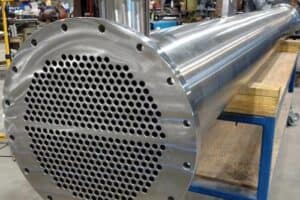
    Shell and Tube heat exchangerKeeping your shell and tube heat exchanger clean is critical for maintaining efficiency, product quality, and long-term equipment performance. Over time, fouling (the buildup of scale, sediment, or biological material) is inevitable—and if left unchecked, it can dramatically reduce heat transfer efficiency, increase operating costs, and even damage your equipment.

    The big question for plant managers and engineers is: How often should you schedule heat exchanger cleaning?

    The answer depends on several key factors, including fouling allowance, operational costs, and your plant’s production cycle. Let’s break down the considerations that will help you determine the optimal cleaning schedule for your shell and tube heat exchanger.

    1. Fouling Allowance

    The Tubular Exchanger Manufacturers Association (TEMA) recommends determining your fouling allowance during the design stage of your heat exchanger. This refers to the maximum acceptable level of fouling before efficiency and performance are compromised.

    • What it means: Engineers account for fouling resistance when calculating the overall heat transfer coefficient.
    • Trade-off: A higher fouling allowance means the exchanger can tolerate more buildup, potentially reducing the frequency of cleanings. However, it also lowers the baseline heat transfer efficiency.
    • How to use it: Monitor your system’s fouling against this threshold. When buildup approaches the limit, it’s time to plan a cleaning cycle.

    2. Cost of Operation

    Fouling doesn’t just affect performance—it directly increases operating costs. As deposits build up inside the heat exchanger:

    • More energy is required to maintain the same output.
    • Production rates may decrease.
    • Operating costs per hour rise.

    When weighing cleaning frequency, consider the balance between the cost of lost production during cleaning and the cost of reduced efficiency due to fouling.

    A practical way to decide is to calculate the “break-even point” where cleaning becomes more economical than running at a reduced efficiency.

    3. Production Cycle & Downtime Planning

    No two facilities operate on the same schedule, so your production cycle is one of the biggest factors in planning a cleaning routine.

    • Schedule cleanings during slower seasons or planned shutdowns.
    • If possible, align cleanings with holidays or long weekends to minimize production losses.
    • Coordinate with your team so that downtime has the least impact on operations.

    This proactive approach helps maintain equipment performance while reducing the disruption to your business.

    How Often Should You Clean?

    There’s no one-size-fits-all answer. Some operations may need multiple cleanings per year, while others with effective fouling mitigation strategies might go several years—or even a decade—between cleanings.

    Key takeaway: The right interval depends on your system’s fouling rate, cost of inefficiency, and production demands. By monitoring performance data and aligning cleaning with your operational schedule, you can find the balance that keeps your heat exchanger efficient without unnecessary downtime.

    Need a New Shell and Tube Heat Exchanger?

    If you’re evaluating cleaning schedules because your current exchanger isn’t performing as it should, it might be time for an upgrade. At Enerquip, our engineers design and fabricate custom shell and tube heat exchangers tailored to your operation. Contact us today to discuss your needs and get a solution built for long-term reliability.

    More from the Enerquip Blog

    How Pinch Analysis Can Unlock Energy Savings in Your Facility

    Preventing Cross Contamination in Shell and Tube Heat Exchangers

    How to Store Your Process Equipment Before Installation

    What to Know About Clean-in-Place (CIP) Systems

    What You Need to Know About Cleaning Different Tube Configurations

  9. How Pinch Analysis Can Unlock Energy Savings in Your Facility

    Comments Off on How Pinch Analysis Can Unlock Energy Savings in Your Facility

    Why Pinch Analysis Matters for Energy Efficiency

    In today’s efficiency-driven world, companies are constantly looking for ways to cut costs, improve sustainability, and get more out of their existing equipment. While switching to renewable fuels or investing in new technology can be effective, one of the most powerful tools for improving energy efficiency is already within reach: pinch analysis.

    Pinch analysis helps manufacturers uncover how efficiently their thermal process equipment is working—and where valuable energy is being wasted. By identifying the “pinch point,” engineers can determine the best opportunities for heat recovery, reduce utility costs, and optimize system design.

    The Thermodynamics Behind Pinch Analysis

    Pinch analysis is based on the laws of thermodynamics, which govern all thermal processing operations:

    • First Law (Conservation of Energy): Energy can’t be created or destroyed—only transferred. In a heat exchanger, heat is not lost but shifted between hot and cold streams.
    • Second Law (Entropy): While the total energy stays the same, its quality decreases. Heat always flows from hot to cold, and in exchangers, cold fluids can’t exceed the temperature of the hottest part of the hot stream.

    The pinch point is the minimum temperature difference where effective heat transfer still occurs. Identifying this point is essential for heat exchanger optimization and maximizing energy efficiency in manufacturing.

    How Pinch Analysis Works

    A pinch analysis evaluates hot and cold streams in a facility to map out where energy can be reused. This process allows companies to:

    • Pinpoint the most effective locations for heat exchangers
    • Set realistic energy and capital cost targets
    • Improve process integration between heating, cooling, and utilities

    Think of it as a heat recovery roadmap—every stream of energy has potential, and pinch analysis shows where it can be reused instead of wasted.

    Pinch Analysis in Action: Industry Examples

    Although it was first applied in petrochemicals, pinch analysis is now widely used across industries striving for cost savings and sustainability:

    • Food & Beverage: Breweries and dairy plants capture waste heat from pasteurization and cooking, reducing fuel use.
    • Pharmaceuticals: Pinch analysis balances heating and cooling needs while cutting utility bills.
    • Data Centers: Operators recover waste heat from servers and reuse it for building heating or district energy.
    • Pulp & Paper: Facilities lower steam consumption and improve production capacity.

    No matter the industry, the goal is the same: recover heat before paying for more energy.

    Benefits of Pinch Analysis

    Unlike traditional process design—which treats core operations, heat recovery, and utilities separately—pinch analysis integrates them into one system with clear efficiency targets. Companies that adopt this method often see:

    • 15–40% lower energy costs
    • 5–15% reduction in process bottlenecks during retrofits
    • 5–10% lower capital costs for new designs

    For plants that have been operating for decades without an energy review, these savings can be transformational.

    Challenges and ROI

    The main obstacles are the time and expertise required for a formal pinch study. While calculations can be complex, the long-term payoff in reduced energy costs and optimized equipment performance often justifies the investment.

    From Analysis to Action: Heat Exchanger Solutions

    A pinch analysis doesn’t just reveal inefficiencies—it often highlights where heat exchangers can make the biggest impact. That’s where working with a trusted partner matters.

    At Enerquip, our engineers design and manufacture high-performance heat exchangers that help clients improve process efficiency and cut energy waste. Whether you’re upgrading existing equipment or planning a new system, we can help you put your pinch analysis insights into action. Contact us today.

    More from the Enerquip Blog

    Preventing Cross Contamination in Shell and Tube Heat Exchangers

    Behind the Burn: How Heat Transfer Systems Refine Aviation Fuel

    How to Store Your Process Equipment Before Installation

    Vacuum Breakers 101: Small Device, Big Impact on Heat Exchangers

    What to Know About Clean-in-Place (CIP) Systems

  10. Enerquip to Exhibit at Heat Exchanger World Americas 2025 – Booth #2212

    Comments Off on Enerquip to Exhibit at Heat Exchanger World Americas 2025 – Booth #2212

    Enerquip is excited to be part of the Heat Exchanger World Americas Conference & Expo, taking place October 15–16, 2025 at the NRG Convention Center in Houston, TX. You can find us at Booth #2212 during exhibit hours from 10:00 AM – 5:00 PM each day.

    This event is the premier gathering for the heat exchanger and heat transfer industry, bringing together manufacturers, fabricators, EPCs, service providers, and end users from across the supply chain. It’s a chance to connect with industry leaders, explore emerging technologies, and discuss solutions to the challenges we face—such as rising energy costs, evolving environmental standards, and the push for greater efficiency.

    With a dynamic two-day schedule featuring both an exhibition and a technical conference, attendees will gain valuable insights on topics like design, materials, corrosion, maintenance, testing, safety, and innovation.

    If you’ll be in Houston, stop by Enerquip’s Booth #2212 to talk with our team, learn more about our heating and cooling solutions, and explore how we can support your next project.

    📍 Event Details
    Date: October 15–16, 2025
    Location: NRG Convention Center – NRG Park, 1 Fannin St, Houston, TX 77054
    Hours: 10:00 AM – 5:00 PM daily